METR’s June 2025 proposal asks what AI developers should disclose about serious model risks, including internal capabilities, monitoring, safety investigations and incident history. It organizes questions around information that outsiders cannot reliably infer from public model behavior, and discusses disclosure incentives and the limits of developer self-reporting. Sensitive evidence could be assessed by trusted reviewers rather than exposed publicly.
 Play video
AI Engineer session on The Age of the Agent: Flo Crivello. It adds practical context for how teams are building and operating AI systems in production.
 Play video
Jake Broekhuizen distinguishes retaining conversation traces from producing memory that changes later behavior. Facts, useful past examples, and procedural instructions serve different purposes and need different update policies. The talk describes extracting lessons from runs, storing them outside the immediate conversation, and loading relevant material on later tasks.
 Play video
Charles Frye explains an inference engine as a request server, a scheduler and a model runner. Queueing and prompt prefill contribute to time to first token; repeated decoding governs later token delivery. KV caching, prefix reuse, batching, CUDA graphs and speculative decoding address different parts of that workload and introduce their own resource tradeoffs. A museum application example illustrates how a demand spike can worsen both initial and subsequent token latency.
 Play video
An insurance company does not train its risk model on your DNA. It trains on artifacts derived from your DNA. Under the moral code the user wrote, that is immoral and perfectly legal, and it is the kind of gap Loophole exists to surface.
 Play video
Where to start? A new era of cost-efficient AI on a day benchmark-makers got humbled, traders got excited, and AI safety researchers got unnerved.
 Play video
This talk was recorded at NDC Copenhagen in Copenhagen, Denmark. #ndccopenhagen #ndcconferences #developer #softwaredeveloper Attend the next NDC conference near you: https://ndcconferences.com https://ndccopenhagen.com/ Subscribe to our YouTube channel and learn every day: / @NDC Follow our Social Media!
 Play video
AI Engineer session on The End of Apps, presented by Kitze, Sizzy.co. It adds practical context for how teams are building and operating AI systems in production.
 Play video
AI Engineer session on It Ain't Broke: Why Software Fundamentals Matter More Than Ever, presented by Matt Pocock, AI Hero @mattpocockuk. It adds practical context for how teams are building and operating AI systems in production.
 Play video
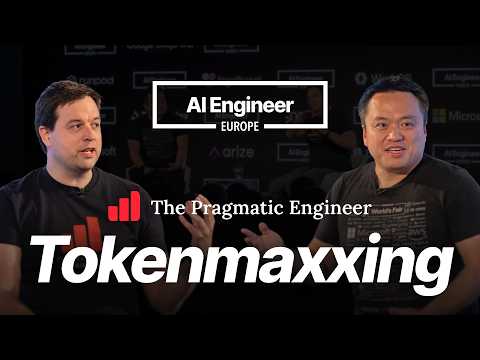
AI Engineer session on How AI is changing Software Engineering: A Conversation with Gergely Orosz, @The Pragmatic Engineer. It adds practical context for how teams are building and operating AI systems in production.
 Play video
AI Engineer session on The New Application Layer - Malte Ubl, CTO Vercel. It adds practical context for how teams are building and operating AI systems in production.
 Play video
AI Engineer session on Taste & Craft: A Conversation with Tuomas Artman, CTO Linear & Gergely Orosz, @The Pragmatic Engineer. It adds practical context for how teams are building and operating AI systems in production.
 Play video
AI Engineer session on "The moments where you want to skip thinking are EXACTLY where thinking matters most", presented by Earendil. It adds practical context for how teams are building and operating AI systems in production.
 Play video
AI Engineer session on State of the Claw, presented by Peter Steinberger. It adds practical context for how teams are building and operating AI systems in production.
 Play video
AI Engineer session on Contact Center Voice AI: Low-Latency Intelligence Extraction from Messy Audio Streams, presented by Dippu Singh. It adds practical context for how teams are building and operating AI systems in production.
 Play video
AI Engineer session on AI Didn’t Kill the Web, It Moved in!, presented by Olivier Leplus (AWS) & Yohan Lasorsa (Microsoft). It adds practical context for how teams are building and operating AI systems in production.
 Play video
AI Engineer session on Running LLMs locally: Practical LLM Performance on DGX Spark, presented by Mozhgan Kabiri chimeh, NVIDIA. It adds practical context for how teams are building and operating AI systems in production.
 Play video
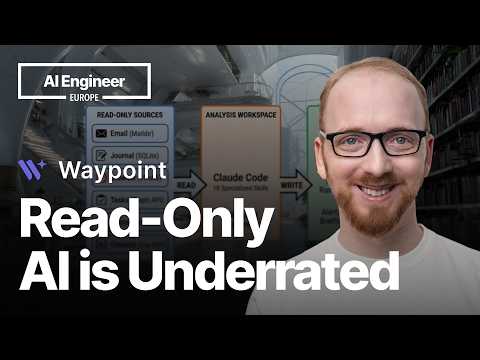
AI Engineer session on Cognitive Exhaust Fumes, or: Read-Only AI Is Underrated, presented by Šimon Podhajský, Head of AI, Waypoint. It adds practical context for how teams are building and operating AI systems in production.
 Play video
AI Engineer session on DSPy: The End of Prompt Engineering - Kevin Madura, AlixPartners. It adds practical context for how teams are building and operating AI systems in production.
 Play video
AI Engineer session on AGI: The Path Forward, presented by Jason Warner & Eiso Kant, Poolside. It adds practical context for how teams are building and operating AI systems in production.
 Play video
AI Engineer session on Build a Prompt Learning Loop - SallyAnn DeLucia & Fuad Ali, Arize. It adds practical context for how teams are building and operating AI systems in production.
 Play video
AI Engineer session on Paying Engineers like Salespeople, presented by Arman Hezarkhani, Tenex. It adds practical context for how teams are building and operating AI systems in production.
 Play video
AI Engineer session on AI Kernel Generation: What's working, what's not, what's next, presented by Natalie Serrino, Gimlet Labs. It adds practical context for how teams are building and operating AI systems in production.
 Play video
AI Engineer session on 2026: The Year The IDE Died, presented by Steve Yegge & Gene Kim, Authors, Vibe Coding. It adds practical context for how teams are building and operating AI systems in production.